You built a stunning website. You launched your products. You hit publish. And then… silence.
This is the frustration of “invisible traffic.” Many entrepreneurs find themselves standing in a digital ghost town, wondering where the customers are. This leads to the inevitable question: Is SEO worth it?
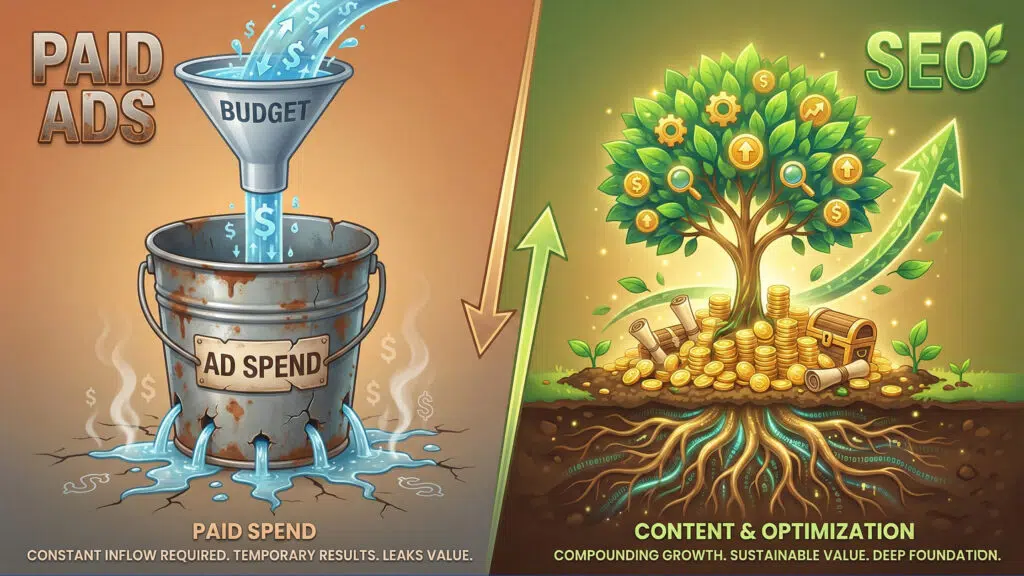
When you look at the instant gratification of social media ads, Search Engine Optimization (SEO) feels slow. But here is the thesis: While paid ads stop working the second you stop paying, SEO is an investment. It is the difference between renting an audience and owning one.


Table of Contents
When done right, the benefits of organic search provide a long-term compounding effect. Your traffic doesn’t just spike and drop; it builds a foundation that pays dividends for years. In the battle of SEO vs paid advertising, SEO is the asset that sleeps while you make money.
Is It Possible to Do SEO Yourself?
Many business owners worry that SEO is a dark art reserved for technical wizards. So, is it possible to do seo yourself? The short answer is yes.
DIY SEO for beginners is entirely feasible, provided you have the patience to learn. You don’t need to be a coder to understand the basics. A solid small business seo strategy starts with understanding your customer, not hacking the algorithm.
However, you must respect the learning curve. Google ranking factors change often. If you choose the DIY route, you become the student, the strategist, and the implementer. It requires grit, but it is not impossible.
Is SEO Free If You Do It Yourself?
Let’s debunk a massive myth right now. Is seo free if you do it yourself? No.
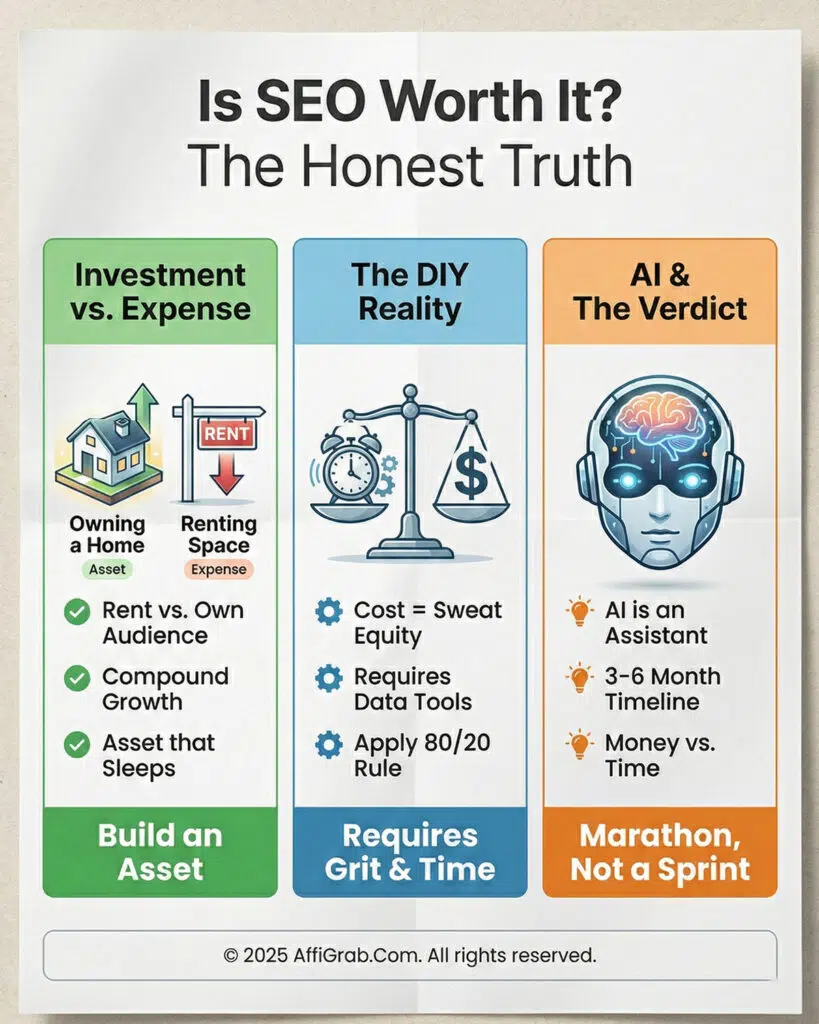
While you might not be writing a check to an agency, you are paying with “sweat equity.” In business, time is money. Every hour you spend keyword researching is an hour you aren’t developing products or talking to clients.
Furthermore, professional SEO requires data. You will likely need subscriptions to software like Ahrefs, SEMrush, or specialized SEO automation tools. When you compare this to the cost of seo services from an agency, you are often trading cash savings for a significant time expenditure.
What Is the 80/20 Rule for SEO?
If you are overwhelmed, you need to apply the Pareto Principle. What is the 80/20 rule for seo? It suggests that 80% of your results will come from 20% of your actions.
You don’t need to fix every minor technical glitch on day one. Instead, focus on these high-impact areas:
- Technical Health: Ensure your site loads fast and is mobile-friendly.
- Quality Content: Solve your user’s problems better than anyone else.
- Backlinks: Get reputable sites to link to yours.
By focusing on these three pillars, you maximize your efficiency. This is the secret to high-ROI SEO for small teams.
Can ChatGPT Do SEO For You?
With the rise of Artificial Intelligence, many are asking: Is SEO dead? Not at all. It has just evolved. But, can chatgpt do seo for you entirely?
ChatGPT and other AI models are incredible assistants. They can help you brainstorm topics, draft meta descriptions, and outline articles. However, AI cannot replace human strategy or genuine insight.
AI lacks the ability to audit a website’s technical architecture or build genuine relationships for backlinks. Use AI as a force multiplier to speed up your workflow, but do not rely on it to run your entire strategy on autopilot.
The Verdict: Calculating Your Real ROI
Ultimately, deciding on a marketing budget comes down to the numbers. You don’t need a complex SEO ROI calculator to understand the value. Ask yourself: Do I have more money than time, or more time than money?

- Hire an Expert: If you need speed and have the budget.
- DIY: If you are bootstrapping and willing to learn.
Remember how long for seo results to appear: typically 3 to 6 months. It is a marathon, not a sprint. But once you cross the finish line, the view is worth it.
Frequently Asked Questions
<script type=”application/ld+json”> { “@context”: “https://schema.org”, “@type”: “FAQPage”, “mainEntity”: [ { “@type”: “Question”, “name”: “Is SEO worth it for small business owners?”, “acceptedAnswer”: { “@type”: “Answer”, “text”: “Yes, SEO is highly valuable for small businesses because it builds long-term brand awareness and brings in traffic without a continuous ad spend. Unlike paid ads, the content you rank today can drive leads for years.” } }, { “@type”: “Question”, “name”: “How long does SEO take to show results?”, “acceptedAnswer”: { “@type”: “Answer”, “text”: “SEO is a long-term strategy. Typically, it takes 3 to 6 months to see significant traction, and up to 12 months for full ROI. This timeline depends on your competition, content quality, and website history.” } }, { “@type”: “Question”, “name”: “What is the difference between SEO and PPC?”, “acceptedAnswer”: { “@type”: “Answer”, “text”: “SEO (Search Engine Optimization) focuses on earning organic traffic through quality content and technical optimization. It is free per click but takes time to build. PPC (Pay-Per-Click) involves paying for ad placement. It offers instant traffic but stops generating leads the moment you stop paying.” } } ] } </script>
Is SEO worth it for small business owners?
Yes, SEO is highly valuable for small businesses because it builds long-term brand awareness and brings in traffic without a continuous ad spend. Unlike paid ads, the content you rank today can drive leads for years.
How long does SEO take to show results?
SEO is a long-term strategy. Typically, it takes 3 to 6 months to see significant traction, and up to 12 months for full ROI. This timeline depends on your competition, content quality, and website history.
What is the difference between SEO and PPC?
SEO (Search Engine Optimization) focuses on earning organic traffic through quality content and technical optimization. It is free per click but takes time to build. PPC (Pay-Per-Click) involves paying for ad placement. It offers instant traffic but stops generating leads the moment you stop paying.
Explore Our Pages: Appsumo Deals, WP Themes, WP Plugins