
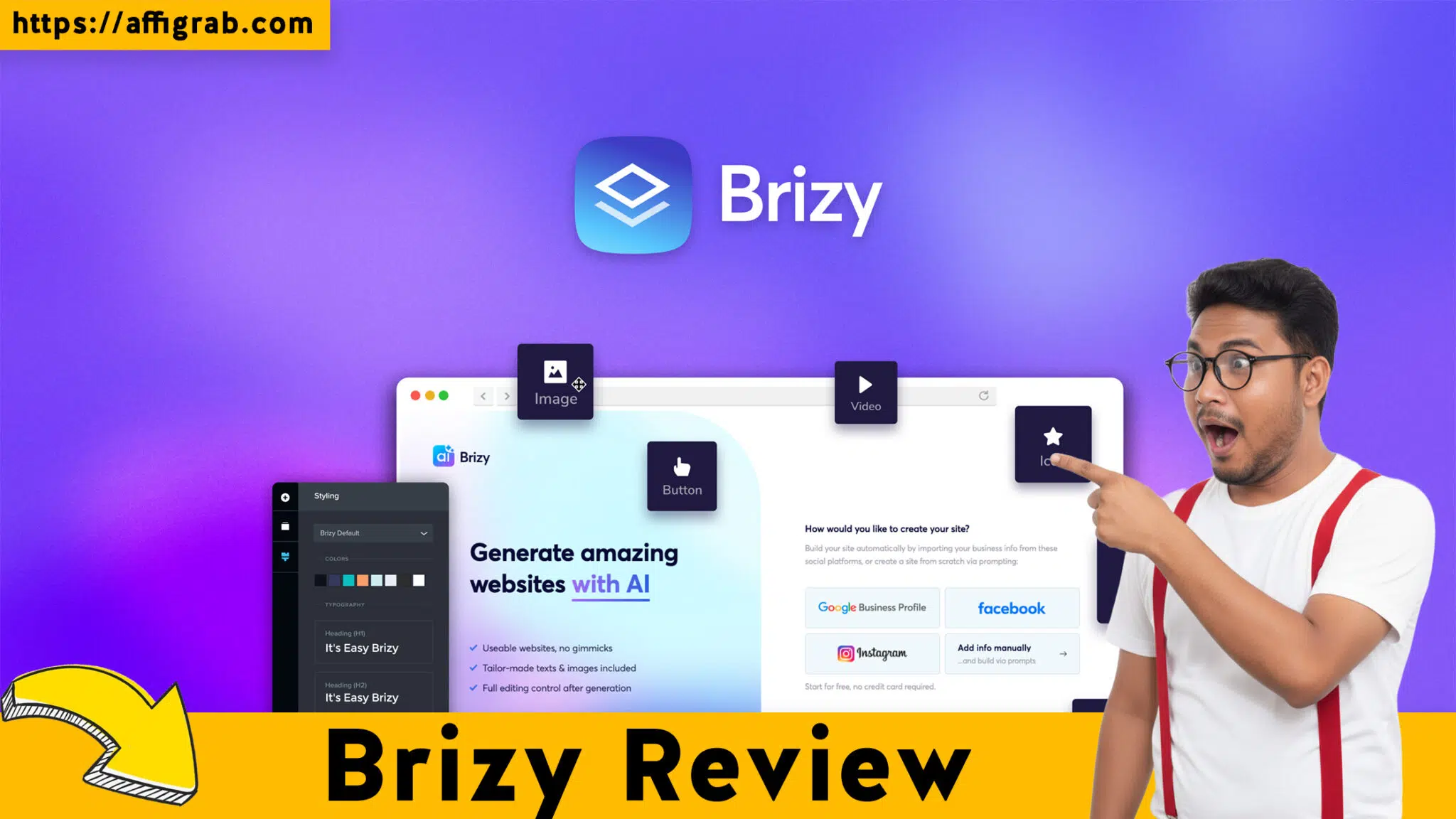
Brizy WordPress Review is essential for any web designer, agency, or digital marketer looking to scale their production without getting bogged down in complex code or rigid, legacy design platforms. As we navigate the digital landscape of 2026, the demand for hyper-fast deployment of stunning, responsive websites has reached an all-time high.
Clients expect rapid turnarounds, while creators face the constant battle of balancing creative freedom with technical limitations. Traditional website generation often forces a compromise between intuitive design and deep, backend optimization.
Table of Contents
Legacy platforms require dozens of additional plugins, constant updates, and continuous troubleshooting just to maintain a cohesive user experience. This review explores a modern solution designed to bridge the gap between automated technology and granular, pixel-perfect control.
The Evolution of No-Code Website Creation in 2026
The current year has marked a massive shift in how digital storefronts and corporate websites are constructed. The era of staring at a blank canvas and dragging individual text boxes for hours is rapidly coming to a close. Modern creators require systems that understand context, generate foundational layouts instantly, and provide an infrastructure that supports deep customization.
An advanced AI website builder has become the gold standard for teams that want to remain profitable and competitive. The core challenge in 2026 is no longer just making a site look acceptable on a desktop computer; it is about building a cohesive ecosystem that functions flawlessly across every device while maintaining a unique brand identity.
Many contemporary page builders have become bloated, slowing down loading speeds and introducing security vulnerabilities through fragmented ecosystem dependencies. Designers routinely express frustration over systems that promise visual freedom but ultimately force the user into predefined grid frameworks.
This restriction dampens creativity and leads to a homogenized internet where every business layout looks nearly identical. To stand out, professional agencies need an environment that handles the heavy lifting of initial asset arrangement while leaving the creative fine-tuning entirely in human hands.

Overcoming the Blank Canvas Syndrome with Intelligence
One of the greatest bottlenecks in modern web production is the initial conceptualization phase. Spending days mapping out user journeys and wireframing basic elements can stall a project before it even starts. By employing highly sophisticated generation systems, designers can bypass this stagnation entirely.
Inputting basic business data, brand directions, or localized information allows a creator to establish a robust, multi-page layout in mere moments. This shift transforms the role of the modern developer from a repetitive technician into an elevated creative director, optimizing production pipelines across the board.
💥 Get the Brizy WordPress Lifetime Deal Now!
Streamlining Agency Workflows for Higher Profitability
For freelance professionals and expanding digital agencies, time is directly tied to revenue. Managing multiple client revisions, setting up separate environments, and configuring theme settings repeatedly limits the number of accounts a team can successfully manage.
The modern solution lies in unified design environments that standardize global elements while providing rapid deployment tools. When a development team can spin up a pristine, high-converting framework in a fraction of the time, overhead drops, and profit margins scale exponentially.
Transforming the Visual Builder Experience for Professionals
At the core of this modern workflow is a vastly improved visual builder experience that prioritizes user intuition and immediate feedback. Creators interact directly with their canvas, receiving a true representation of the final product without needing to constantly preview drafts or switch back and forth between administrative dashboards.
The environment is engineered around contextual options, meaning that clicking on any individual asset brings up precisely the adjustments needed for that specific component. This elimination of cluttered sidebars and nested menus keeps the focus exactly where it belongs: on the visual artistry and structural flow of the webpage.
Seamless Adaptation Across Modern Devices
With mobile traffic dominating global internet usage, fluid scaling is no longer a luxury. Modern design tools must naturally construct frameworks that look pristine on ultra-wide screens, tablets, and mobile devices simultaneously.
The visual editor ensures that layout adjustments made at a global level flow logically down to smaller screens, preventing broken containers and overlapping text blocks. This meticulous control over modern responsiveness guarantees that user engagement remains high, regardless of how an audience accesses the digital space.
Centralized Styling and Total Design Consistency
Maintaining uniform branding across a sprawling multi-page platform can quickly become an administrative nightmare if handled manually. If a client requests a color scheme modification or a typography overhaul deep into the development cycle, changing individual elements across dozens of pages can waste valuable hours. Implementing robust global styling mechanisms solves this entirely.
With a few centralized adjustments, every button, heading, text block, and accent color updates instantly across the entire digital infrastructure, keeping the project perfectly cohesive and beautifully aligned with the client’s brand guidelines.
Deep-Dive into the Brizy WordPress Review Features
Choosing the right design framework requires a deep understanding of its technical capabilities and how those features translate into daily production. A modern web creator cannot rely solely on basic layout tools; they require an ecosystem that solves complex structural challenges.
In this section, we break down the core functionalities of the platform, looking at real-world applications and how the integrated systems elevate standard development workflows.
Unleashing the Power of the Integrated AI Website Builder
The centerpiece of this modern application is its automated generation engine. Instead of manually constructing every section from scratch, developers can prompt the system with structured business information or pull directly from an active Google Business Profile. This feature eliminates the tedious setup of contact pages, services sections, and landing page layouts.
For a real-world scenario, imagine a web design agency tasked with building ten local business websites in a single week. Instead of creating wireframes, a designer feeds the specific business data into the system, and the AI website builder assembles fully formed, multi-page architectures in minutes.
The output is not a static mockup; it is a live, functional WordPress site complete with relevant placeholder content, logical page hierarchies, and contextual image placements. From this point, the designer can step in to refine the messaging and fine-tune specific visual choices, saving dozens of hours on initial drafting.

Mastering the True Visual Builder Experience
A major pain point in web design is dealing with abstract, back-end interfaces that do not accurately represent what the visitor will see. This platform addresses that by introducing an incredibly smooth visual builder experience.
Every adjustment happens in real time directly on the front-end canvas. Clicking on a text block, image, or container opens a contextual, floating toolbar that places crucial configuration settings right at the cursor.
Consider a marketing professional who needs to alter a layout during a live client meeting. Instead of digging through sidebar menus or adjusting custom CSS coordinates, the marketer clicks the element, changes the padding, scales the typography, and swaps the asset instantly.
This frictionless environment keeps the creative momentum moving forward and allows for rapid prototyping right in front of stakeholders.
⚡ Grab Brizy WordPress Before It’s Gone!
Utilizing the Flexible Drag-and-Drop Editor
The core layout engine utilizes a highly intuitive drag-and-drop editor. This system operates without structural rigidity, meaning you can place elements precisely where they need to go within columns, rows, and sections. The editor contains more than 36 built-in elements, including advanced forms, maps, sliders, and video background containers.
For a freelance creator, this means building highly complex section layouts without writing a single line of code. If a project requires a floating testimonial slider nestled next to a lead-capture form, the creator simply drags those components into position. The editor manages the underlying code structure cleanly, preventing the bloat commonly associated with visual page compilation.
Global Styling for Instant Brand Standardization
Managing a cohesive aesthetic across an entire digital asset can become problematic when a project scales. If a client requests a sudden color palette shift or a typeface modification, changing every asset individually is a massive waste of time. The global styling architecture solves this by grouping design parameters into centralized control panels.
If a web creator is building a twenty-page corporate platform and needs to shift the primary corporate blue to a refreshed brand hue, they update the color utility in the global styling menu. Instantly, every button border, heading link, icon accent, and background block across all twenty pages adopts the new color scheme, ensuring absolute brand consistency with a single click.
High-Converting Asset Creation with the Landing Page Builder
Digital marketing campaigns rely heavily on specialized, isolated pages optimized exclusively for conversions. The built-in landing page builder is engineered specifically to eliminate distractions and drive user action. It includes robust lead generation utilities, countdown timers, and integrated opt-in forms.
For an e-commerce entrepreneur launching a seasonal promotion, the landing page builder allows them to quickly deploy independent squeeze pages. These pages can run completely separate from the primary site navigation, capturing email addresses or directing traffic to checkout funnels with minimal load times and maximal visual impact.
Launching Advanced Stores with the WooCommerce Builder
Standard e-commerce templates can often feel restrictive and generic. The dedicated WooCommerce builder grants complete control over the entire shopping journey. Designers can build bespoke product pages, custom cart layouts, personalized checkout funnels, and dynamic shop grids.
A real-world application involves an artisanal apparel brand that wants an unconventional, high-end look for its product showcases. Instead of settling for a generic store grid, the designer uses the WooCommerce builder to design unique layout templates for individual product categories, embedding custom multi-angle image galleries, interactive sizing tabs, and prominent add-to-cart callouts that perfectly match the brand identity.
Structuring Dynamic Content Using the Comprehensive Theme Builder
For advanced dynamic architectures like real estate directories, listing sites, or editorial blogs, static pages are insufficient. The robust theme builder enables creators to design repeating dynamic templates for header areas, footer spaces, archive directories, and single post layouts.
For instance, an agency building a real estate portal can use the theme builder to create a single master layout for property listings. This layout dynamically pulls images, pricing data, and feature descriptions from custom fields. When a new property is added to the database, it automatically populates within the custom theme design, eliminating the need to design separate pages for every new listing.
Enhancing Engagement with Mobile-Optimized Templates
Starting a project with a solid foundation is made simple by an extensive library of over 250 mobile-optimized templates. These designs span numerous industries, including hospitality, healthcare, education, corporate services, and personal portfolios.
A developer working under a tight deadline for a medical clinic can load a pre-designed, responsive template pack. Because these assets are mobile-optimized templates from the ground up, the developer can rest assured that the text scaling, touch targets, and column stacking will behave perfectly on smartphones and tablets, bypassing the tedious process of manual mobile breakpoints optimization.
Professional Client Management via White-Label Settings
For web agencies, maintaining a professional, proprietary image is a key component of building trust and commanding premium rates. The integration of full white-label settings allows developers to completely rebrand the visual builder ecosystem.
An agency can remove all references to the original software, replacing the branding with their own agency logo, support links, and system names. When a client logs into their WordPress administrative dashboard to make minor content updates, they interact with an environment that appears to be custom-built by the agency, elevating the perceived value of the agency’s services.
🛒 Claim Your Brizy WordPress Discount Here!
Scaling Operations with a Premium Agency License
To truly grow a digital agency, managing software licensing costs is vital. Utilizing a plan that grants a premium agency license or high-volume site allocation ensures that a team can scale their client base without their software margins eroding. Having access to high site limits enables an agency to spin up development sandboxes, build client staging sites, and host dozens of active customer platforms under a single, highly cost-effective framework.
Exact AppSumo Pricing and License Tiers
To help you choose the ideal package for your specific business requirements, here is the official, live pricing structure available through the AppSumo Select deal. Every plan includes lifetime access, a 60-day money-back guarantee, and access to all future updates corresponding to the matching plan types.
License Tier 1
The introductory tier is available for a one-time purchase price of $59, down from the original value of $1,428. This plan provides lifetime access to the platform for a single live website. It includes the full suite of pro designs and features, the AI website builder, the theme builder, the landing page builder, the pop-up creator, the stories builder, the WooCommerce builder, marketing tools, and full access to white-label settings.
License Tier 2
The second tier is positioned at a one-time purchase price of $219, reduced from the standard retail price of $2,868. This package expands your operational limits significantly, granting a lifetime license for up to 50 websites. It contains every single pro feature, design option, marketing utility, and administrative control included in Tier 1, making it an excellent sweet spot for growing freelancers and small design teams.
License Tier 3
The third option, which is designated as the recommended plan by the platform, is available for a one-time payment of $309, down from the original retail valuation of $4,308. License Tier 3 grants a lifetime activation capacity for up to 100 websites. This tier features the complete, unrestricted deployment of all core builder elements, AI features, e-commerce integrations, and professional rebranding capabilities across all 100 properties.
License Tier 4
The ultimate tier is engineered for large-scale digital agencies, enterprise networks, and prolific web publishers, priced at a one-time investment of $549, down from the standard valuation of $5,978. License Tier 4 provides massive deployment capabilities, allowing for activation on up to 1,000 websites. It unlocks the entire functional ecosystem, allowing an agency to maximize its profit margins across a massive portfolio of client assets.
Real-World Competitor Analysis
To evaluate the true value of the platform, it is essential to analyze the competitive landscape. Below are three leading alternative design engines, detailing their actual market costs and licensing structures.
1. Elementor Pro
Elementor Pro is a prominent visual page compilation engine within the ecosystem. In terms of cost, it starts at $59 per year for the Essential plan, which covers a single website. For freelancers, the Expert plan costs $199 per year for up to 25 installations, while the Agency plan costs $399 per year for up to 1,000 installations.
Elementor Pro operates strictly as a recurring software-as-a-service (SaaS) monthly/yearly subscription model, meaning if you stop paying annually, you lose access to updates and premium widget functionality. Compared to the AppSumo offer, Elementor lacks a lifetime investment path, resulting in high ongoing operational costs for growing agencies.
2. Divi Builder
Divi by Elegant Themes is a popular system that offers flexible framework deployment. Divi utilizes a dual structure, providing a yearly subscription at $89 per year or a basic lifetime deal at $249. Both plans grant usage across unlimited websites. While Divi offers an appealing lifetime option, its visual canvas is often criticized for producing heavy shortcode bloat that can slow down performance.
Additionally, advanced cloud features and specialized automated generation assets require separate, recurring add-on purchases, whereas the AppSumo bundle includes comprehensive features upfront.
3. Breakdance Builder
Breakdance is a modern, developer-focused competitor that prioritizes clean code execution and rapid page rendering. It costs $99.99 per year for a single site or $199.99 per year for a 100-site license. Breakdance operates purely on a recurring annual subscription framework with no lifetime purchase options.
While it offers excellent technical performance, it lacks built-in white-labeling capabilities and integrated content-generation engines, requiring developers to buy additional plugins to achieve the same agency environment.
Pros and Cons of Brizy WordPress
- Pro: The sophisticated AI website builder generates operational multi-page layouts from a single prompt or Google Business profile.
- Pro: The front-end visual builder experience features contextual toolbars that streamline editing and eliminate sidebar clutter.
- Pro: True lifetime access across all license tiers removes recurring software overhead, significantly protecting your agency margins.
- Pro: Built-in white-label settings let you completely rebrand the editing environment to showcase your own brand to clients.
- Pro: Fully integrated e-commerce and marketing tools, including a landing page builder and WooCommerce builder, require no extra setup.
- Con: The automated layout generation system requires a stable internet connection to communicate with the central processing servers.
- Con: The extensive library of mobile-optimized templates can feel overwhelming to navigate during the initial setup phase.
- Con: Deep, intricate custom database loops require familiarity with the dynamic theme builder settings to configure properly.
Comprehensive Brizy WordPress Review FAQ
Can I use the platform to build client websites under my own agency brand?
Yes. The integration of advanced white-label settings allows you to completely remove the original developer branding from the interface. You can replace it with your company logo, custom support documentation links, and specialized system naming conventions. This lets you deliver a fully branded web builder interface to your clients, enhancing your professional image and allowing you to command premium management fees.
How does the automated design engine streamline my creation workflow?
The integrated AI website builder processes descriptive prompts or active local business data to assemble complete structural frameworks in under a minute. Instead of wireframing sections manually, you receive a functional foundation complete with responsive text, headers, and media. From there, you use the drag-and-drop editor to refine elements, accelerating your production timeline.
Are the structural design components optimized for handheld devices?
Absolutely. Every asset, section, and structural layout block inside the platform relies on flexible fluid grid frameworks. The system offers more than 250 mobile-optimized templates that automatically scale across desktops, tablets, and smartphones. You can also preview and fine-tune responsive breakpoints directly inside the editor canvas to ensure flawless cross-device performance.
Can I design specialized online stores and sales funnels?
Yes, the platform includes a powerful WooCommerce builder designed to replace generic e-commerce designs. This feature lets you build custom single-product layouts, shop grids, cart environments, and checkout pipelines. Additionally, you can utilize the landing page builder to create standalone, high-converting promotional pages to capture leads and drive targeted campaign conversions.
What happens if I scale past my initial website installation limits?
The AppSumo lifetime offer is structured across scalable license tiers to accommodate business growth. If you start with License Tier 1 for a single project and later secure client accounts, you can upgrade your plan to access a premium agency license. This unlocks installation paths for 50, 100, or up to 1,000 separate websites, depending on the tier you select.

The Ultimate Verdict
The current AppSumo deal provides an outstanding return on investment for modern web creators, freelancers, and agencies aiming to scale production while cutting software costs. By combining an intuitive drag-and-drop editor with a powerful AI website builder, this platform eliminates the typical bottlenecks of manual site creation.
While legacy platforms lock essential agency tools behind costly annual subscriptions, this deal provides full access to global styling utilities, a robust theme builder, and complete white-label settings for a one-time purchase.
Removing recurring fees allows you to retain 100% of your client maintenance revenue. Whether you need License Tier 1 for a single core project or License Tier 4 to power a large agency network, this tool delivers the performance, speed, and design flexibility required to succeed. Secure your lifetime access today to build a faster, more profitable web design workflow.