
Bugsmash Review: In the fast-paced digital landscape of 2026, where software deployment happens in minutes and user expectations are at an all-time high, the traditional method of hunting down bugs through messy email threads and vague screenshots is officially obsolete.
Table of Contents
Bugsmash has emerged as a critical solution for developers, designers, and project managers who are tired of the “digital charades” involved in client feedback and error reporting. By providing a centralized, visual workspace, this tool transforms how teams identify, track, and resolve issues across websites, PDFs, videos, and mobile applications.
Why Visual Feedback is Essential in 2026
The complexity of modern web applications means that a single error can stem from a variety of sources, ranging from CSS conflicts to backend API failures. Traditional bug reporting often lacks the necessary context, leaving developers to guess what the user was doing or seeing at the exact moment of failure. This is where Bugsmash steps in to bridge the gap between non-technical stakeholders and the development team.

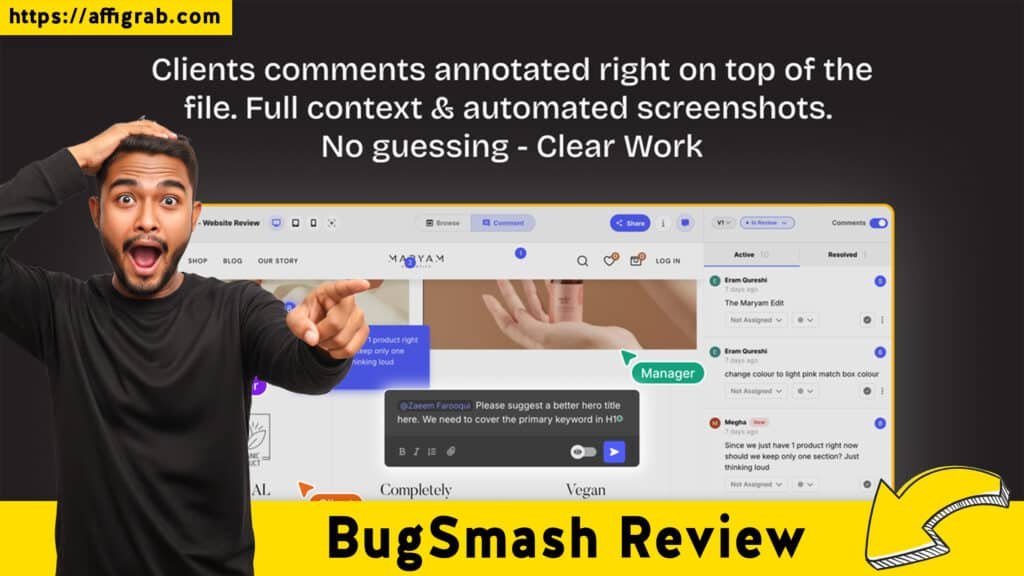
With a robust error monitoring dashboard, Bugsmash allows users to see exactly what is happening on the screen. Instead of receiving a message that says “the button doesn’t work,” a developer receives a pinned annotation on the specific UI element, complete with a screenshot and, in many cases, technical metadata. This level of full stack visibility ensures that no detail is lost in translation, significantly reducing the time spent on the initial discovery phase of debugging.
Breaking Down the Communication Barrier
One of the most significant challenges in software development is the “it works on my machine” syndrome. Bugsmash solves this by capturing the environment details of the reporter. When a client or QA tester leaves a comment, the tool automatically gathers data about their browser, screen resolution, and operating system. This context is vital for creating visual bug reports that are actually actionable.
Streamlining the Issue Resolution Workflow
Beyond just finding bugs, Bugsmash is designed to manage them. The platform’s issue resolution workflow allows teams to assign tasks to specific members, set priorities, and track the status of every fix from “Open” to “Resolved.” In 2026, efficiency is the only way to stay competitive, and by eliminating the need for constant back-and-forth meetings to clarify feedback, Bugsmash empowers teams to focus on what they do best: building great products.
High-Performance Features for Scaling Apps
As applications grow, so does the volume of feedback. Bugsmash is built to handle this scale without becoming a bottleneck itself. The integration of AI-powered review suggestions in 2026 has further enhanced the tool, allowing it to automatically flag potential UI/UX inconsistencies or accessibility issues before a human even looks at the page.
Tech Stack Integration and Automation
No tool exists in a vacuum. Bugsmash understands this by offering seamless tech stack integration with popular project management and communication tools like Jira, Slack, ClickUp, and Trello. When a new bug is reported in Bugsmash, it can automatically trigger a ticket in Jira or a notification in a dedicated Slack channel. This ensures that the development team stays within their preferred environment while still receiving high-fidelity data from external reviewers.
Real-Time Collaboration Without the Friction
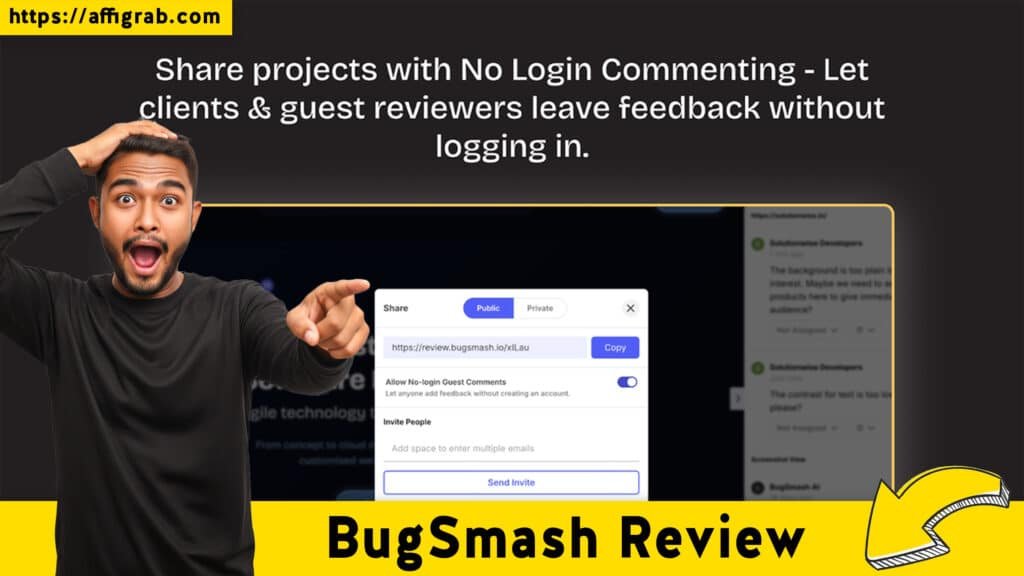
The “no-login” guest commenting feature is perhaps the most praised aspect of the Bugsmash ecosystem. In a professional setting, asking a high-level stakeholder or a busy client to create yet another account just to review a landing page is a major point of friction. Bugsmash removes this barrier entirely. You simply send a link, and they can start pinning comments immediately. This frictionless approach leads to faster approvals and a much happier client base.
The Problem Bugsmash Solves: Ending the Debugging Chaos
The primary problem Bugsmash solves is the fragmentation of information. Before tools like this existed, a single bug report might involve a Slack message, followed by an email with an attachment, followed by a screen recording sent via WeTransfer. Bugsmash centralizes this entire experience.
By providing real-time alerts and a unified view of all digital assets—whether it’s a live staging URL or a prototype PDF—Bugsmash ensures that everyone is looking at the same “source of truth.” This prevents the common 2026 pitfall of developers fixing a bug on an outdated version of a site because the feedback was tied to a previous iteration.
Version Control and Comparative Reviews
In the iterative world of design and development, being able to see what changed between Version A and Version B is crucial. Bugsmash includes versioning features that allow you to stack iterations and compare comments. If a client asks why a certain change was made, you can easily refer back to the annotated history of the project.
💎 Get the BugSmash lifetime deal before it’s gone
Conclusion: Is Bugsmash the Right Choice for You?
If your team spends more than an hour a week trying to decipher client feedback or hunting for the “steps to reproduce” a bug, then the answer is a resounding yes. The current AppSumo lifetime deal makes it an even more attractive proposition, offering a one-time payment path to a more organized, professional, and efficient development cycle. In a year where AI and automation are driving the industry, having a grounded, visual, and highly integrated tool like Bugsmash is not just a luxury—it is a necessity for maintaining a high standard of digital quality.
Comprehensive Features and AppSumo Pricing for Bugsmash
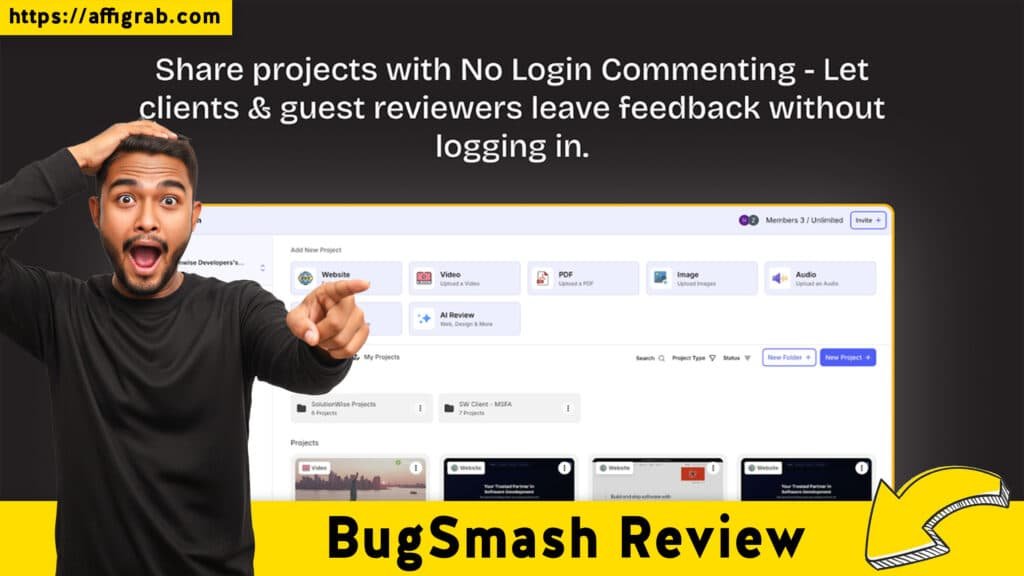
The Bugsmash Review wouldn’t be complete without a deep dive into the specific mechanics that make this tool a powerhouse for modern development teams. In an era where software complexity is skyrocketing, Bugsmash provides a simplified, visual-first approach to identifying errors before they reach the end user. This section explores the robust feature set and the current lifetime deal pricing available on AppSumo to help you determine which tier fits your current project scale.
Advanced Feature Analysis and Real-World Use Cases
The core philosophy of Bugsmash is to remove the “guesswork” from the debugging process. By integrating directly into your web environment, it captures technical data that would otherwise require manual extraction by a senior developer.
1. The Centralized Error Monitoring Dashboard
At the heart of the platform is the error monitoring dashboard. This isn’t just a list of bugs; it is a command center that categorizes issues by severity, browser type, and user impact.
- Use Case: Imagine a high-traffic e-commerce site launching a Black Friday sale. Instead of waiting for customer support emails to trickle in, the lead developer monitors the dashboard in real-time. They notice a spike in checkout failures specifically on Safari mobile. Because the dashboard aggregates these instances, the team can pivot immediately to a fix rather than investigating hundreds of individual reports.
2. Generating Visual Bug Reports with Precision
Bugsmash allows any user—even those without a technical background—to create visual bug reports. By clicking on any element on a webpage, the tool generates a pinpoint annotation.
- Use Case: A marketing manager notices that a hero banner is overlapping the navigation menu on a specific tablet resolution. Instead of trying to describe the overlap in a Slack message, they click the banner and leave a note. Bugsmash automatically attaches a screenshot and the exact CSS coordinates, giving the front-end developer everything they need to adjust the media query.
💎 Get the BugSmash lifetime deal before it’s gone
3. JavaScript Exception Tracking and Technical Metadata
For the more technically inclined, Bugsmash offers deep JavaScript exception tracking. It listens for unhandled promises and script errors that occur in the user’s browser.
Use Case: A SaaS application has a complex dashboard where data occasionally fails to load. With Bugsmash, the developer can see the exact line of code that threw the error and the console logs leading up to the event. This provides full stack visibility, allowing the developer to see if the issue was a front-end syntax error or a 500-series server response.
4. Real-Time Alerts and Notification Triggers
In 2026, speed is the ultimate currency. Bugsmash provides real-time alerts via email or integrated chat tools the moment a critical error is detected.


- Use Case: A fintech app cannot afford even five minutes of downtime on its login page. By setting up specific triggers, the DevOps team receives a phone notification the second the login API returns a failure, allowing them to rollback the latest deployment before the majority of the user base is affected.
5. Seamless Tech Stack Integration
Bugsmash is designed to play well with others. Its tech stack integration capabilities allow it to sync with Jira, Trello, Asana, and Slack.
- Use Case: A digital agency manages thirty different client websites. By connecting Bugsmash to their internal ClickUp workspace, every time a client leaves a visual comment on a staging site, a corresponding task is automatically created in the agency’s “To-Do” column, complete with all the technical attachments.
6. Detailed User Session Data and Replay
Understanding the “how” is just as important as the “what.” Bugsmash captures user session data, allowing developers to see the breadcrumbs of actions a user took before an error occurred.
- Use Case: A user reports that they “can’t save their profile.” By reviewing the session data, the developer sees that the user actually clicked the ‘Cancel’ button by mistake because of a confusing UI layout, or perhaps they triggered a validation error that wasn’t properly displayed.
7. Performance Bottlenecks and Deployment Tracking
Bugsmash helps identify performance bottlenecks by tracking load times and script execution speeds across different geographical regions. Furthermore, its deployment tracking feature allows you to mark exactly when a new version of your code went live.
- Use Case: After pushing a new update, the team notices that page load times have increased by 200ms. By looking at the deployment markers in Bugsmash, they can correlate the performance dip to the specific code merge that happened at 2:00 PM, making a “revert and investigate” strategy much easier to execute.
Bugsmash Review: Navigating the Issue Resolution Workflow
Managing a bug is a journey. The issue resolution workflow in Bugsmash ensures that no ticket falls through the cracks. Each bug has a lifecycle: New, In Progress, Resolved, and Archived. You can assign owners, set due dates, and maintain a threaded conversation directly on the bug report. This keeps the communication contextual and prevents the fragmentation of information across multiple platforms.
💎 Get the BugSmash lifetime deal before it’s gone
Exact AppSumo Pricing and License Tiers
To get the most out of Bugsmash, it is essential to understand the current AppSumo lifetime deal structure. These prices are valid as of the latest update and offer a significant discount over the traditional monthly subscription models.
License Tier 1: $79 (One-Time Purchase)
This tier is ideal for solo developers, freelancers, or small startup teams managing a limited number of assets.
- Price: $79
- Project Limit: 5 Active Projects
- Team Members: 3 Users
- Monthly Event Limit: 50,000 Events (Errors/Logs)
- Data Retention: 30 Days
- Core Features: Includes visual bug reporting, browser extension access, and basic integrations with Slack and Trello. This tier provides enough power to handle the issue resolution workflow for a handful of client sites.
License Tier 2: $199 (One-Time Purchase)
Designed for growing agencies or small departments that require more overhead and longer history tracking.
- Price: $199
- Project Limit: 25 Active Projects
- Team Members: 10 Users
- Monthly Event Limit: 250,000 Events
- Data Retention: 60 Days
- Core Features: All features from Tier 1, plus advanced tech stack integration (Jira, GitHub), white-labeling options for client reports, and priority email support. This is the “sweet spot” for agencies that need to manage a larger portfolio of websites.
License Tier 3: $299 (One-Time Purchase)
The “Unlimited” tier for power users, large enterprises, or high-traffic platforms that generate a massive volume of data.
- Price: $299
- Project Limit: Unlimited Active Projects
- Team Members: Unlimited Users
- Monthly Event Limit: 1,000,000 Events
- Data Retention: 180 Days
- Core Features: All features from Tier 2, including the full suite of JavaScript exception tracking, unlimited user seats, and the highest level of full stack visibility. This tier is essential for teams that need long-term data retention to analyze historical performance bottlenecks and track improvements over several months.
Maximizing Your Investment
When choosing a tier, consider your monthly event volume. If you are running a high-traffic application, the real-time alerts and high event limits of Tier 3 are necessary to ensure that you don’t miss any critical visual bug reports once your monthly quota is reached. Regardless of the tier, the ability to centralize your debugging process within a single error monitoring dashboard provides an immediate return on investment by saving hours of manual labor every week.
By securing this lifetime deal, you are essentially “future-proofing” your development cycle. As web standards evolve in 2026 and beyond, having a tool that provides consistent, data-rich feedback from your user session data ensures your applications remain stable, performant, and user-friendly. In the context of this Bugsmash Review, the value proposition is clear: spend less time talking about bugs and more time fixing them.
Competitor Analysis: How Bugsmash Compares in 2026
When evaluating the value of a Bugsmash Review, it is essential to look at the broader landscape of visual feedback and error monitoring. While Bugsmash offers a unique lifetime entry point on AppSumo, several established players dominate the SaaS market with monthly subscription models.
1. BugHerd
BugHerd is perhaps the most direct competitor to Bugsmash, focusing heavily on visual feedback for websites via a “sticky note” metaphor.
- Current Pricing: Standard plans start at $39/month, with Premium reaching $129/month and Deluxe at $229/month.
- Model: Monthly SaaS subscription.
- Comparison: Unlike Bugsmash, which supports various file types including PDFs and videos, BugHerd is strictly web-focused. While BugHerd’s task board is highly refined, the recurring cost can quickly exceed the one-time $79 investment for Bugsmash.
2. Sentry
Sentry is a titan in the industry, specifically geared toward developers who need deep technical diagnostics.
- Current Pricing: The Team tier starts at $26/month, while the Business tier jumps to $80/month.
- Model: Monthly SaaS subscription (Usage-based).
- Comparison: Sentry provides superior JavaScript exception tracking and distributed tracing. However, for non-technical clients or designers who just need to “point and click” on a UI issue, Sentry’s interface can be overwhelming and lacks the simple no-login guest commenting that makes Bugsmash so accessible.
3. Ruttl
Ruttl is a fast-growing visual feedback tool that allows for live web editing and collaboration.
- Current Pricing: Approximately $8/month per user.
- Model: Monthly SaaS subscription.
- Comparison: Ruttl is excellent for design-heavy teams that need to edit CSS on the fly. However, Bugsmash’s ability to act as a more generalized error monitoring dashboard for multiple file formats gives it a slight edge for multi-disciplinary agencies.
💎 Get the BugSmash lifetime deal before it’s gone
Bugsmash Review: Pros & Cons
Before making a final decision, consider these specific advantages and limitations identified by the user community in 2026:
Pros:
- Lifetime Value: Eliminates the “subscription fatigue” of paying $30-$100 every month.
- No-Login Guest Access: Clients can leave visual bug reports without the friction of creating an account.
- Multi-Format Support: Annotate live sites, mobile apps, videos, and PDFs in a single workspace.
- Tech Stack Integration: Seamlessly pushes issues to Jira, Slack, and ClickUp to maintain your issue resolution workflow.
- AI-Powered Audits: The 2026 “Roast Your Website” feature catches performance bottlenecks before clients see them.
Cons:
- Early Stage Growth: Some users report occasional lag when loading complex, script-heavy URLs.
- Learning Curve: Setting up the initial deployment tracking and SDK integrations requires some technical knowledge.
- Feature Gaps: Currently lacks a native “Kanban” or tabular list view for internal management (though this is on the 2026 roadmap).
Frequently Asked Questions
Q: Do my clients need to pay or sign up to leave feedback? A: No. One of the strongest points of this tool is its frictionless nature. You can send a guest link, and they can start pinning comments and providing user session data immediately without an account.
Q: Can Bugsmash track backend server errors? A: Bugsmash primarily focuses on front-end and client-side issues. For deep full stack visibility involving server-side database crashes, you would typically pair this with a specialized logging tool, though its tech stack integration allows it to centralize reports.
Q: How does the AI review feature work? A: The AI tool performs an automated sweep of your UI/UX and accessibility markers. It generates an error monitoring dashboard report that flags inconsistencies, saving you from receiving basic “alignment” feedback from your clients.
Q: Is there a limit on how many people can review a project? A: In License Tier 3, you have unlimited members and guest reviewers. Tiers 1 and 2 have specific member seats but still allow for unlimited “Guest” reviewers to ensure your visual bug reports are never throttled.
Q: Will Bugsmash slow down my live website? A: No. The script is designed to be lightweight. It primarily triggers during the feedback session or when a JavaScript exception tracking event occurs, ensuring it doesn’t create new performance bottlenecks.
Q: Can I use my own branding? A: Yes, License Tier 3 includes custom branding options. This allows you to host the review experience on your own subdomain, reinforcing your professional image during the issue resolution workflow.
Final Verdict: Is Bugsmash Worth It?
In the current 2026 software market, Bugsmash represents a rare opportunity to own a professional-grade feedback infrastructure without the burden of a monthly “tax.” While competitors like Sentry or BugHerd may offer more legacy stability, they lack the specific “all-in-one” versatility for videos, PDFs, and websites that modern agencies require.
If you are a freelancer or agency owner who is tired of playing “digital charades” with clients over email and Slack, the Bugsmash Review conclusion is clear: This is a must-buy. The ability to capture real-time alerts, technical user session data, and visual annotations in one centralized error monitoring dashboard will save your team dozens of hours per month. For the price of just two months of a competitor’s subscription, you gain a lifetime of organized, professional, and efficient project delivery. Secure the Tier 3 deal while it remains available to ensure your business has thefull stack visibility needed to scale in 2026.
💎 Get the BugSmash lifetime deal before it’s gone
Kavout Review 2026: Is This AI-Powered Stock Analysis Lifetime Deal Actually Worth It?